The Cornish Pasty Pilgrimage
Beef, potato, swede and onion, raw when they go in and slow-baked until they meld, sealed inside a thick crimped pastry case. The only food in England with the same legal protection as Champagne - and it must be made in Cornwall to carry the name.
Why this dish?
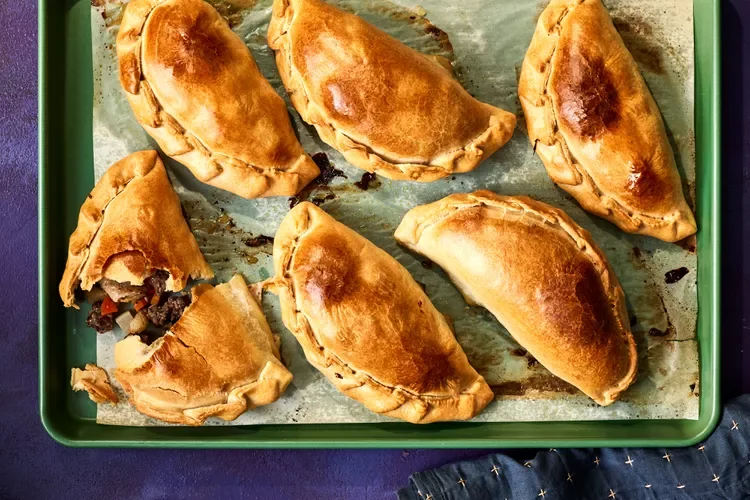
The Cornish pasty has Protected Geographical Indication status, which means a pasty can only be called "Cornish" if it was made in Cornwall. The recipe is legally defined too: diced or minced beef, sliced potato, swede and onion, seasoned with salt and pepper, enclosed in a shortcrust pastry case, crimped to one side into a D shape, and baked slowly so the raw filling cooks inside. No carrots. No peas. No messing about. It was invented as a portable meal for tin miners - the thick crimped edge was the handle, held with dirty hands and discarded - and it's been made the same way for centuries.
You can buy a pasty anywhere in the country now, but there's a reason the protection exists: a proper Cornish pasty, baked that morning by a family bakery that's been doing it for three generations, eaten warm on a harbour wall with the Atlantic below you, is a different thing entirely from the service-station version. Cornwall has dozens of celebrated bakeries, each guarding their recipe like a state secret, and the annual Cornish Pasty Championships at the Eden Project are taken with deadly seriousness. Fly in, eat the real thing at the source, and you'll never settle for a cold one at Paddington again.
Our Picks
Philps Bakery
- Address
- East Quay, Hayle, Cornwall (and several other Cornish locations)
- What to order
- The traditional steak pasty - the "P" on each one stands for premium. Eat it warm, ideally outside, ideally near the sea.
- Book ahead
- No booking - it's a bakery counter. Go in the morning for the freshest bake.
- Pro tip
- The traditional pasty has no extras - just beef, potato, swede, onion, salt and pepper. That's the one to try first. Then go back for the cheese and onion.
Morris Pasties
Newquay town centre
A small, beloved pasty shop using a recipe held with the family solicitor (literally). Made down the road in St Columb at Peter Morris butchers.
- What to order
- The traditional steak pasty, or the chicken if you want a change; eat it on Fistral Beach.
Good to know
A Cornish pasty is crimped to the side, not on top - that's how you spot the real thing. The crimp was the handle for tin miners' dirty hands; purists don't eat it. Newquay airport is small and the town is a 15-minute taxi or bus ride. If you have time, Padstow (20 min) and St Ives (40 min) are both worth the detour and both have excellent bakeries. The pasty is best eaten warm, not reheated.
Your day plan
Wheels up to eating the dish.
Outbound Flight goals - what you're aiming for
- 07:30Depart London Gatwick
- 08:40Land Newquay
- 09:15Bus or taxi into Newquay town
- 09:45Walk the harbour, Fistral Beach, the headland
- 11:00First pasty of the day from Morris Pasties - eaten on the harbour wall
- 12:30Bus to Padstow or St Ives if time allows, or explore the coast path
- 14:00A cream tea (you're in Cornwall - it's the law)
- 15:30A second pasty, different bakery, compare notes
Ready to go?
Search flights to Newquay and book your extreme day trip.